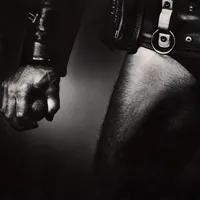
Teutonic Titans 1976-2026 - Accept New Album
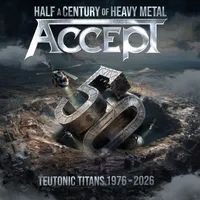

Fifty Years of Metal in New Hands
After five decades of career, Accept no longer needs to prove its importance to heavy metal. Its riffs are part of the genre's collective memory, and precisely for that reason Teutonic Titans 1976–2026 chooses a curious way to celebrate this legacy, revisiting nineteen songs with the participation of some of the best-known names in metal and rock.
The proposal works as a great collective celebration. Instead of simply reproducing the classics, the band places different musicians in front of this repertoire, allowing each combination to add small changes of personality to the compositions. Wolf Hoffmann remains a central presence, while Mark Tornillo maintains his voice amid a cast that feels like a true gathering of generations of heavy rock.
A Parade of Guests
It is difficult to ignore some of the names involved. On 'Fast As A Shark', for example, we have Phil Anselmo, from Pantera, on vocals, Kirk Hammett, from Metallica, on guitar, Billy Sheehan, from The Winery Dogs, on bass, and Mikkey Dee, from Scorpions and formerly of Motörhead, on drums. Meanwhile, 'Balls To The Wall' features vocals from Rob Halford, from Judas Priest, guitar from Matthias Jabs, from Scorpions, bass from Rex Brown, from Pantera, and drums from Jason Bowld, from Bullet For My Valentine.
Other equally striking guest appearances emerge throughout the album. Tobias Forge, from Ghost, takes on the vocals of 'Save Us'; Hansi Kürsch, from Blind Guardian, participates in 'Losers and Winners'; Sebastian Bach lends his voice to 'London Leatherboys'; and Chris Jericho, from Fozzy, participates in 'Restless and Wild'.
The Past Remains the Benchmark
That is precisely where the album's main question lies. The performances are competent and some of the guest appearances add interesting flavors, but we are talking about songs that already have definitive versions in the history of heavy metal. No matter how talented the guest may be, there will always be an inevitable comparison with what Accept originally recorded.
That is why I believe Teutonic Titans 1976–2026 works better when viewed as a celebration rather than an attempt to replace the classics. The interest lies in hearing these familiar compositions through other voices and musicians, noticing small differences without expecting them to erase the past.
A Shared Legacy
In the end, the album's greatest merit may lie precisely in the scale of the tribute. Bringing together names associated with Metallica, Pantera, Judas Priest, Scorpions, Ghost, Blind Guardian, and so many other bands shows the reach that Accept has achieved over fifty years. These are artists from different generations coming into contact with a repertoire that helped define heavy metal.
Teutonic Titans 1976–2026 does not need to surpass the originals to fulfill its purpose. It works as a collective photograph of a legacy that remains alive. And, for me, it is precisely this perspective that makes the experience interesting: after fifty years, Accept is not merely revisiting its own history, it is sharing it with some of the musicians who helped keep metal alive.