Neverending

A band that made slowness its signature
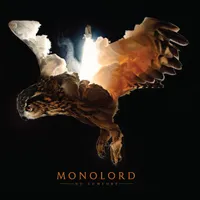
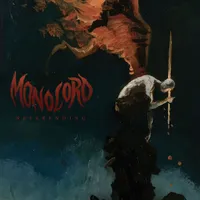
Monolord comes from Gothenburg, Sweden, and for more than a decade has been building its reputation on long riffs, extreme heaviness, and repetition that does not feel empty, but hypnotic. Since 2013, the trio formed by Thomas Jäger, Mika Häkki, and Esben Willems has been consolidating a very distinct identity within doom and stoner metal, with albums that blend crushing fuzz and melodies buried beneath the dust of their own sound. Neverending arrives as the latest chapter in this journey, produced by Sylvia Massy and crafted with greater attention toward more direct and immediate songs.
An album that is heavy, but breathes
Listening to Neverending, I feel that the band did not simply want to repeat the formula that made them recognizable. The album remains anchored in that dragging, full-bodied doom that is the group's trademark, but now it sounds more varied, more human, and even more intimate in certain moments. The album keeps the power of the riff as its gravitational center, but works better with contrasts, allowing the songs room to breathe without losing their sense of sonic mass.
Riffs that march like blocks of stone
What catches my attention the most here is the way Neverending transforms each track into a sculpture of weight. The opening track 'Iodine' firmly establishes this territory, while 'Inside a Collider' fully immerses the listener in a slow, repetitive, and almost hypnotic vibration. 'You Bastard' adds momentum with a more pulsating energy, and 'Crystal Bridge' brings a broader groove, with movement and a flavor that expands the album’s horizon without breaking its backbone. I hear a work that does not rush, it moves forward like an ancient machine, heavy yet very well lubricated.
More honesty, less mask
The album carries a more personal tone than its predecessors. The lyrics explore themes such as anxiety, loss, suicide and the emotional impact of these subjects, and that changes the way I experience the music. Instead of sounding merely colossal, the record feels exposed from within, as if the weight were not only in the amplifiers but also in the chest. This dimension gives Neverending a different gravity, drier and more sincere.
Production that makes room for the wall
Sylvia Massy’s production is one of the album’s greatest strengths. The sound has become clearer, and this does not dilute the heaviness, on the contrary, it allows each instrument to emerge with greater definition. The guitars resonate with texture, the bass occupies an important place without swallowing everything, and the drums support the structure with precision without turning the album into an undifferentiated mass. I get the impression that this production did not polish the band too much, it merely revealed the architecture that had always existed beneath the dust.
An ending that surprises without breaking the mood
The closing track, 'It’s Neverending', strikes me as a very intelligent move. It is an unexpected turn, especially due to the presence of guest growled vocals by Jörgen Sandström, which change the color of the song without pulling it away from the album’s landscape. To me, this perfectly summarizes the spirit of Neverending: it respects the essence of Monolord, but does not remain chained to it. There is always some small opening, some crack through which different air can enter.
Verdict
In the end, Neverending sounds to me like an album of maturity, not complacency. It maintains the colossal heaviness I expect from Monolord, but replaces excessive haze with a clearer vision of its own sound. It is a more varied, more personal, and better-resolved album, one that does not try to impress through speed, but through the persistence with which it settles into memory. I leave the listening experience with the feeling of having crossed a stone road beneath a dark sky: slow, dense, but alive in every detail.