Megadeth

Introduction: A Legend Comes to an End
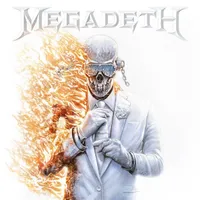
I remember the first time I heard Megadeth as if I had been struck by a sonic thunderbolt that shook the entire structure of my musical sensibility. Over more than four decades, Megadeth defined thrash metal with coldness and surgical precision, carving its name among the genre’s titans alongside Metallica, Slayer, and Anthrax. Founded by Dave Mustaine after his meteoric departure from Metallica in the early 1980s, the band has always walked the fine line between visceral introspection and instrumented fury. Now, with the release of Megadeth, the 17th and final album of their career, we feel not only that a cycle is closing, but that it shines with a peculiar intensity that only this band’s journey could produce, like one last lightning strike before the storm finally fades.
Band Context and Expectations
Always led by Dave Mustaine’s relentless vision, Megadeth were never just another metal band. They were a tectonic force that moved mountains, with intricate riffs, sharp lyrics, and compositions that challenged both technique and the listener’s mind. Throughout their career, several lineups carried the name Megadeth, but the essence always remained the same: uncompromising intensity and a complex narrative built around Mustaine himself. And when the news arrived that this album would be the last, along with confirmation of a farewell tour, anticipation filled the air like a whirlwind ready to explode into sound.
The Sonic Peak: An Intense Listening Experience
Pressing play on Megadeth, the immediate sensation is like being thrown off a sonic cliff straight into a frenzied pit. 'Tipping Point', the opening track, does not play around, it is a fast, precise punch that encapsulates the combative spirit the band has always carried. Cutting riffs, impeccable drumming, and that feeling that every chord is about to burst into sparks, this is how this odyssey begins.
Throughout the album, the band’s classic identity is fully present: intricate solos and guitar duels that recall their most iconic moments, carrying both the weight of tradition and the urgency of those who know this may be the last time. Teemu Mäntysaari, on guitar, adds a virtuosic freshness that dialogues with Mustaine in passages reminiscent of thrash’s finest moments. The alternation between fast tracks and more mid-tempo ones creates a mosaic that travels through different eras of the band itself, as if we were watching a film made of sonic flashbacks.
Highlights and Thematic Reflections
Some songs offer more than speed, they tell stories. 'Hey, God?!' brings a less explosive, more introspective mood, almost like an internal conversation of an artist looking back and weighing his battles. There is a raw honesty in the way Mustaine confronts his own journey, blending anger, reflection, and even acidic humor in lyrics that feel branded in iron and fire.
'Let There Be Shred', on the other hand, shamelessly celebrates pure virtuosity, an almost metaphysical invitation for music to remain alive in our ears, as if the riff were a torch that never goes out. And when we reach 'Puppet Parade' and 'Made To Kill', we feel the band walking through different phases of its career, from relentless thrash to the more restrained heaviness of the compositions that accompanied their success in the 1990s.
The Finale: Emotion and Symbolism
As the album approaches its end, 'The Last Note' brings an emotional weight that seems to justify its title perfectly. Instead of closing with sheer bombast, there is an almost melancholic nuance, as if the band were saying: Here is everything we are and everything we were.
And then, like a veil lifted to close the curtain, comes the curious inclusion of a Metallica cover, 'Ride The Lightning', as a bonus track, a reimagined version of a classic tied to the early chapter of Mustaine’s history with the band. This choice is loaded with symbolism, it is as if he were putting a full stop not only on the album, but on the entire cycle that began long ago, offering a nod of respect and, at the same time, an artistic closure.
Verdict: A Thunderous Farewell
Overall, Megadeth is an album that breathes the band’s history without getting lost in cheap nostalgia. It delivers sharp riffs, moments of introspection, and above all, a palpable feeling that every note carries decades of experience and passion. It is not just a farewell album, it is a mirror reflecting the journey, struggles, and achievements of one of metal’s most influential bands. And, like every great final work, it leaves us with that burning sensation along the spine: a mix of longing and reverence that only Megadeth could provide.











-ep_1767978969395_200_200.webp?alt=media&token=7080b5d5-8e65-4673-9804-0d793a7b1aac)