Marrow Deep
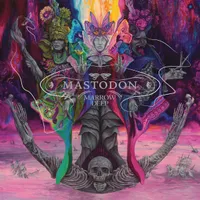

There Are Albums That Weigh on Your Chest Before They Even End
The weight here is not only in the amplifiers, there is a different kind of gravity running through the album, as if every riff carried something that does not entirely fit within the music. It is difficult to listen to this work without thinking about the profound transformation that affected Mastodon with Brent Hinds' departure and, later, his death. After decades as one of the band's central figures, his absence represents much more than the loss of a guitarist and songwriter. It alters the very landscape of a group that built part of its identity alongside him. What is interesting is to see how this circumstance found a musical response. Instead of turning the loss into a static memorial, the band seems to have allowed it to alter the album's own movement.
Since their formation in Atlanta in 2000, Mastodon has built a career marked by a refusal to remain within a single definition. Sludge metal, progressive metal, psychedelia, and hard rock have always found a place in their music, often within the same composition. The band developed an identity strong enough to remain recognizable even when changing direction, and this ability to experiment without losing its own face became one of the most important hallmarks of their career.
It is within this context that I encounter Marrow Deep. The album arrives after a profound transformation in the band's lineup, with Nick Johnston taking over guitar duties and João Nogueira adding keyboards and synthesizers. These changes do not seem to have been treated merely as a necessity for replacement. They end up influencing the album's very sonic personality.
Mastodon Remains Heavy, but Now There Is More Air Between the Blows
When I think about what defines Marrow Deep as a whole, the first thing that comes to mind is balance. Mastodon has not abandoned its dense riffs, Brann Dailor's technically exuberant drumming, or Troy Sanders' commanding presence. Weight remains a fundamental part of the experience. The difference is that it no longer seems to occupy the center of the room by itself.
The keyboards and synthesizers now have a much more noticeable function. They create environments, extend certain sensations, and add a dimension that was not as evident in the previous lineup. At times, I have the impression that the band leaves a window open inside a song that seemed destined to be completely sealed. The air coming through that window is psychedelic, progressive, and, occasionally, surprisingly melodic.
An Album That Does Not Need to Run All the Time
Another characteristic that stands out is the way Marrow Deep handles its dynamics. The album does not seem interested in turning every minute into a display of force. There are moments when the music slows its pace, makes room for textures, and allows the atmosphere to take on part of the spotlight.
This is important because it makes the heavier moments work differently. When everything is intense all the time, intensity loses some of its meaning. Here, the alternation between aggression and contemplation creates a kind of tide: sometimes it recedes, revealing details on the ocean floor, then returns with enough force to remind us that we are still listening to Mastodon.
There is a stronger presence of progressive and psychedelic rock influences, particularly in the use of keyboards and the construction of certain atmospheres. These are influences that naturally fit the band's musical history and, on this album, help expand its vocabulary without making it seem as though it is wearing a costume from another era.
The Lineup Change Appears in the Music Itself
Nick Johnston's arrival is more interesting when viewed within the band's collective dynamic. There is no sense that he was brought in simply to fill the space left by Brent Hinds. His presence contributes to a guitar approach that connects with the previous material, but also helps push some compositions in a different direction.
João Nogueira plays an even more evident role in this transformation. The synthesizers and keyboards give the album a layer that changes the way certain songs are perceived. Rather than remaining confined to the background, these instruments become part of the atmosphere and, at times, seem to guide the very identity of a passage. This is one of the album's most important aspects because it shows that the change in members was not limited to the liner notes. It can be heard in the music. Mastodon remains recognizable, but some of the tools used to build that identity are different.
Brent Hinds' Absence Is There, but It Does Not Dominate Everything
It is impossible to ignore the context surrounding Brent Hinds when listening to Marrow Deep. His departure and subsequent death inevitably cast a shadow over the album, especially because he had been connected to Mastodon's identity since its earliest years. I can feel that absence, but I do not think the album functions simply as a musicalized posthumous tribute.
The album shows that the loss seems to be part of its emotional environment without determining every artistic decision. There is a perceptible melancholy, but it coexists with curiosity, weight, experimentation, and movement. The album does not stand still and stare backward. It acknowledges the absence and keeps moving forward.
What Remains After the Last Riff Fades Away
After listening to Marrow Deep from beginning to end, my feeling is that I have witnessed a band going through a real change without pretending that nothing happened. Mastodon remains recognizable, but not exactly motionless. The riffs remain heavy, the drumming remains complex, the melodies still carry personality, and experimentation continues to be part of the group's DNA.
The difference lies in the space created around these elements. The keyboards, synthesizers, and new approaches to guitar add a more atmospheric dimension, while the progressive and psychedelic references expand the territory explored by the band. All of this makes the album seem less interested in repeating a formula and more willing to discover how that formula can breathe after such a profound transformation. The result does not erase the past, but it also does not allow the past to be the only possible destination.