Goliath


The weight of history and the return of a familiar voice
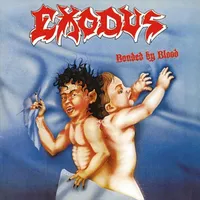
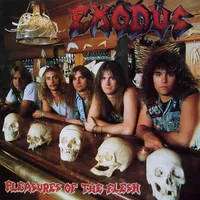
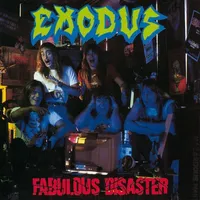
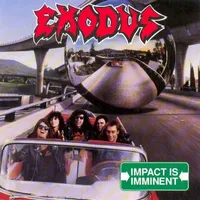
To speak of Exodus is, inevitably, to revisit one of the most solid foundations of thrash metal. Since the days when they helped shape the genre in the Bay Area, the band has always carried a non-negotiable identity: raw aggression, razor-sharp riffs, and an attitude that never bends to time. Over the decades, lineup changes have come and gone, but the spirit has remained intact, like a war machine that only replaces parts but never loses its function.
It is precisely in this context that Exodus returns after five years. And it is not a nostalgic or procedural return, it is as if it had never left. Its presence here does not feel like a rescue of the past, but rather a brutal reinforcement for the band’s present.
A monolith of modern aggression
Diving into Goliath, the feeling is of being dragged by a dense and uncontrollable current. The album does not try to reinvent thrash, but it also does not settle for merely repeating formulas. There is a very clear balance between tradition and refinement, a more robust production, well-defined structures, and a surgical execution, without losing the ferocity that has always been the band’s trademark.
The sound here is heavy in an almost physical way, as if each riff had mass and occupied space in the environment. The guitars advance like blades in constant rotation, while the drums maintain a continuous, almost industrial pressure. And at the center of it all, Dukes, who returns to the band after more than a decade, leads with a harsh, intense vocal delivery, loaded with a rage that always seems on the verge of overflowing.
Moments that define the impact
The opening with '3111' already sets the tone with a denser and more oppressive atmosphere, almost like a premonition of what is to come. It is not just an introduction, it is a portal that pulls the listener into a territory where everything sounds heavier, darker.
In 'Summon Of The God Unknown', the band dives even deeper into a heavy approach, with a structure that grows like an entity being gradually summoned. There is a sense of grandeur here, but always anchored in brutality, nothing sounds excessive or out of place.
Meanwhile, 'The Dirtiest Of The Dozen', the closing track, brings a more direct and visceral energy, almost like a continuous punch. It is that kind of track that captures the rawest spirit of thrash: fast, aggressive, and uncompromising, yet still precise and well-structured. And, as a complement, I would say it seems to carry a tone of telling the story of the band’s trajectory and dedication.
Between tradition and permanence
What stands out to me the most in Goliath is how it manages to sound current without losing its essence. There is no attempt here to align with modern trends or soften the impact , on the contrary, the album reinforces the band’s identity with even greater conviction. It is like watching a titan that, even aged, continues to crush everything around it with the same strength as before.
In the end, listening to this work feels like entering a familiar territory, but noticing new details with each step. Exodus is not just reaffirming its legacy, it is showing that it still has a lot to say, and that its voice remains loud, harsh, and impossible to ignore.