Goh-Ka - Sigh New Album


When Death Takes on New Colors
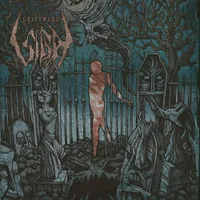
There are bands that explore metal, others seem to treat it as raw material for something that has yet to receive a name. Sigh clearly belongs to the second category. Since its early years, the Japanese group led by Mirai Kawashima has built an identity that is impossible to reduce to a single style, blending black metal, thrash, psychedelia, progressive rock, folk elements, and unconventional experimentation. On Goh-Ka, this inclination remains intact, but takes on a particularly dark dimension: the album transforms the impermanence of life and the decomposition of the body into musical matter.
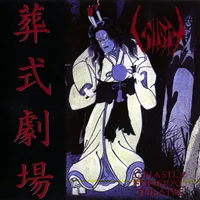
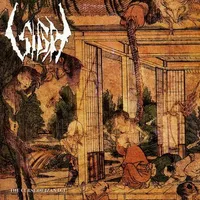
The concept originates from the Kusōzu, Buddhist representations that depict the different stages of human decomposition after death. It is naturally an uncomfortable idea, but what is interesting is realizing that Sigh does not turn this theme into a permanently funereal soundtrack. Throughout the listening experience, the album alternates tension, beauty, strangeness, and bursts of aggression, creating a kind of constant movement between what attracts and what disturbs. This opposition ultimately becomes essential to understanding the record.
A Chaos That Knows Exactly Where to Step
What caught my attention most about Goh-Ka was the way the band manages to introduce so many different musical languages without making the album feel like a random collection of ideas. There are moments when black metal takes control, while at others Japanese traditional melodies emerge, along with psychedelic passages, retro-flavored keyboards, noises, orchestral elements, and arrangements that could easily drift into progressive rock. The surprise is constant, but the personality of Sigh works like an invisible thread keeping everything connected.
This variety also appears in the dynamics. The album knows when to lower the temperature before attacking again, allowing more atmospheric sections enough room to build anticipation. When the guitars and drums return with greater intensity, the impact is precisely greater because there is contrast. For me, this alternation prevents the complexity from becoming exhausting and allows the music to breathe even when it is loaded with information.
The presence of Frédéric Leclercq on bass and Mike Heller on drums also fits this approach very well. There is enough precision and strength to support the abrupt changes in direction, but the performance does not turn technique into an empty spectacle. The guitars of Nozomu Wakai, the vocals and keyboards of Mirai, and the saxophone of Dr Mikannibal add different textures to the whole, while the Japanese instruments and references give the album a personality that could hardly be mistaken for that of another band.
Beauty, Discomfort, and Strangeness
One of the best qualities of Goh-Ka lies precisely in its ability to make an apparently strange passage work within a larger composition. Unputenpu, for example, presents a more immersive and psychedelic side, while also featuring a solo from Mikael Åkerfeldt, from Opeth. Rather than seeming like a guest appearance added merely to attract attention, the guest fits naturally into the musical universe of the song.
At other moments, the band plunges into much more aggressive and disturbing territory. Black metal is present, but not as a stylistic prison. It serves as one of the many tools used to shape the album's atmosphere. Extreme vocals, tempo changes, melodic passages, and almost cinematic moments coexist without one element needing to eliminate the others.
This makes Goh-Ka an album that rewards repeated listening. On the first listen, it is easy to notice only the sheer number of things happening. Later, the connections between them begin to emerge. Certain transitions stop feeling abrupt, particular melodies take on a different weight, the quieter moments begin to function as important pieces within the overall architecture. It is an album that does not reveal all of its cards immediately.
An Experience That Is Difficult to Tame
I do not consider Goh-Ka a particularly easy album to absorb, and perhaps that is one of its greatest virtues. Sigh does not try to simplify its language to make the experience more comfortable. The group seems interested in preserving precisely that feeling of not knowing where the music will take us a few seconds later.
The result is a heavy, experimental, and frequently disconcerting album, but one that also finds room for memorable melodies and moments of unexpected beauty. The theme of death could have produced an excessively uniform work, yet the band chooses another path: it transforms the idea of impermanence into movement, contrast, and transformation.
After so many years of a career, perhaps the greatest merit of Sigh is continuing to make music that does not need permission to be strange. Goh-Ka does not seek to make the path easier for the listener, it opens several doors and lets each one reveal a different part of its personality. For me, it is precisely this combination of control and unpredictability that keeps the album alive. Death may be the central theme, but musically Goh-Ka is an album full of movement.