Engines of Demolition
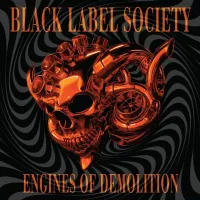

The Bearded Giant and the Machine That Doesn't Rust
Some metal legends carry with them the weight of granite monuments, immovable, immense, witnessing time without asking permission to exist. Zakk Wylde is of that breed. Ever since he raised Black Label Society from the ashes of an already glorious career alongside Ozzy Osbourne, he has built something rare in the world of heavy music: an impregnable fortress where loyalty to oneself is worth more than any passing trend. It is not a band that follows the market, it is a band that the market has learned to respect.
The trajectory of BLS is reminiscent of those American trucks from the 70s, road swallowers that don't know the word "flat tire". In the first decade of existence, Wylde and his comrades fired off several studio albums like someone unloading a machine gun magazine, dominating festivals and establishing a sonic code of conduct: riffs that crush, solos that bleed, and a brutal honesty that never needed makeup. But like any powerful machine, there were moments of maintenance, years dedicated to the painful farewell to Ozzy, his mentor and beacon.
Five Years of Silence and the Thunder That Followed
When Engines Of Demolition finally emerges after half a decade of waiting, the question hung in the air like cigarette smoke in a poorly ventilated studio: does the tank still have fuel? The answer comes in the form of thirteen tracks that make no apologies for existing and they shouldn't.
What hits me first is the absence of fat. There is no feeling here of an album that is "too complete", where three songs could disappear without anyone noticing. Each track has a purpose, an almost mechanical function within the whole. It's as if Wylde had passed the entire album through a fine sieve, eliminating the superfluous until only muscle and tendon remained.
The Duel Between the Hammer and the Velvet
The listening unfolds like a journey through familiar terrain, but with renewed obstacles. There are moments when Wylde's guitar works like heavy machinery, heavy in the literal sense, as if each note had its own gravitational mass, capable of deforming the ground it treads on. And then, without warning, the same man who was crushing stones seconds ago picks up an acoustic guitar and presents us with open wounds.
The ballads on this album are not rests, they are emotional traps. They do not beg for your attention, they demand it. When Wylde decides to show the card of vulnerability, he does not throw it timidly on the table, he drives it in with a knife. It is in this contrast between sonic aggression and intimate exposure that the true malice of the album lies: it disarms you before it punches you.
The Farewell That Needed No Words
And then there is the ending. The last track is not just any song, it is a sonic epitaph, a silent farewell to the one who shaped Wylde's destiny since the late 1980s, his master Ozzy Osbourne. When the clean and melancholic strings fill the space, you realize we are witnessing something that transcends musical criticism: we are listening to a man digging a grave in the form of a song, not out of mud, but out of notes.
Engines Of Demolition does not reinvent the wheel because it doesn't need to. What it delivers, however, is the roundest, heaviest, and best-balanced wheel that Black Label Society has produced in years. It is an album made by someone who has already proven everything he had to prove, but who still feels the urgency to leave marks on the concrete. If this is the sound of a veteran dealing with losses and new beginnings, then may all new beginnings be like this, made of iron, blood, and contained tears.